
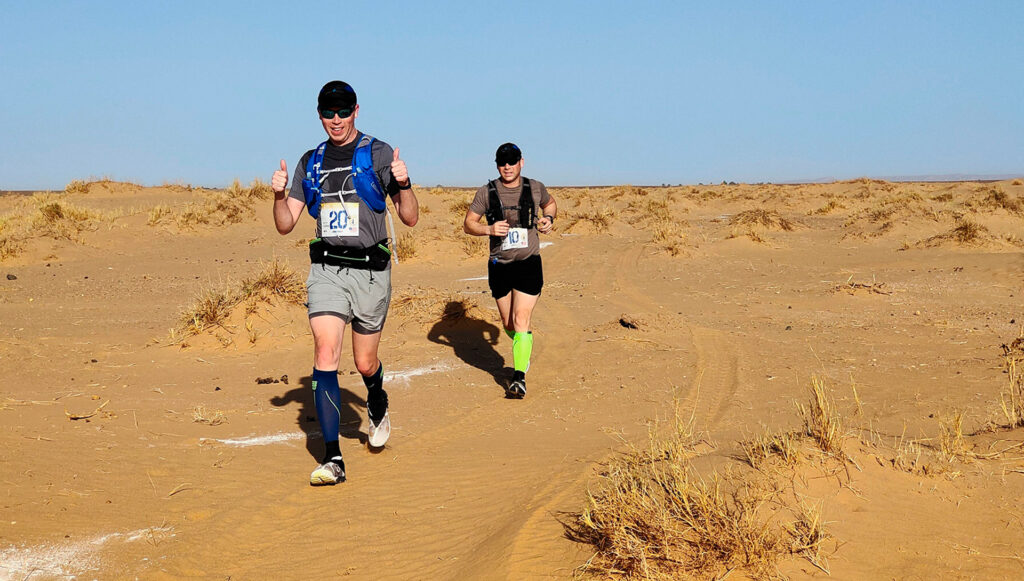
Choosing which marathon to run next is one of the most exciting, and overwhelming, decisions a runner faces. Not every race is just a race: some take you through the valleys of the Himalayas, others across the dunes of the Sahara or along the fairy chimneys of Cappadocia. The world’s best marathons are full experiences that combine the raw challenge of 42K with landscapes and cultures you simply cannot find at any city race.
Running a destination marathon means committing to an adventure that goes far beyond the finish line. Whether you’re chasing the most scenic route on earth, looking for a wild off-road challenge, or searching for a race that doubles as a bucket-list journey, this guide covers 12 epic races worth planning your entire year around, including some of the most extraordinary events in the Wildmarathon Series.
What Makes a Marathon Truly Epic? The Criteria That Set These 12 Apart
Not every marathon earns the word epic. Distance is the same in all of them: 42.195 km. What changes is everything that surrounds those kilometres, and that is precisely what separates a standard city race from the kind of experience you talk about for years. The best marathons in the world share a common thread: they turn a physical challenge into a journey with a story.
If you want to understand what this series of races offers before diving into the list, explore the full race programme catalogue to get a sense of the destinations, distances, and all-inclusive formats available.
Beyond the asphalt: why setting and experience matter as much as distance
A marathon through the Rose Valley in Cappadocia or across the coniferous forests of Finnish Lapland demands something different from you than a loop around an urban park. The terrain, the altitude, the light at race time, the smell of the place: all of it feeds into how you experience the effort. These are not decorative details. They change the race entirely.
The programmes around these 12 events are built on that logic. Camel rides in the Sahara, acclimatisation trekking in the Annapurna Natural Park, a safari day in Tanzania: the race is the centrepiece, but the days around it carry just as much weight. That full picture is what makes a destination marathon worth travelling across the world for.
- Setting: does the route pass through landscapes that are genuinely rare or hard to access by other means?
- Cultural depth: does the programme include contact with local communities, traditions, or heritage sites?
- Race formats: are distances available for different levels, from 10k to full marathon?
- All-inclusive structure: are transfers, meals, accommodation, and activities managed by the organiser?
- Personalisation: does the race offer a custom bib, jacket, or finisher medal?
Adventure marathons vs. city marathons: key differences to know before you sign up
City marathons are optimised for speed. Flat tarmac, precise pacers, dense crowds, chip timing down to the millisecond. Nothing wrong with that if a personal best is your goal. Adventure marathons work from a different premise: the course may cross dune sectors, jungle paths, or high-altitude trails, and the cut-off times reflect that. The Cappadocia marathon, for instance, sets a cut-off of 5 hours 46 minutes and 24 seconds for the full distance at 1,030 metres of accumulated elevation.
Before signing up for any destination race, it helps to ask yourself a clear question: are you chasing a time, or chasing an experience? The answer will tell you which type of event fits your current goals, and that distinction runs through every recommendation in the sections ahead.
The 12 Best Marathons in the World for Runners Who Crave Adventure
These twelve races share the criteria you’ve already read about: scenery that earns its place in memory, a cultural layer that goes beyond a finisher medal, and a logistical package that removes friction so you can focus on running. They span five very different natural environments, which is why no single training plan or packing list fits them all.
Covering the best marathons in the world means going well beyond the six majors. The races below cross Saharan dunes, Himalayan valleys, volcanic tuff canyons, equatorial forest, and Arctic taiga. None of them is a road loop through a city centre. All of them ask something extra of you, and give back considerably more.
Desert and dune races: Sahara, Merzouga and beyond
The desert is a specific kind of suffering. Heat builds from the ground up, the terrain shifts under your feet, and the silence between aid stations is absolute. The Merzouga race sits inside an all-inclusive programme that combines the marathon, half marathon or 10k with a camel trip, a night in a luxury hayma, and lunch in the oasis. The race itself is mostly flat, with two dune sectors built into the route so the landscape is never just a backdrop.
Running on sand changes your gait whether you want it to or not. Shorter stride, higher cadence, more load on the calves. That physical adaptation is part of what makes desert races memorable: your body remembers a surface it has never trained on.
- The Merzouga course is practically flat with two dune sectors included for the full desert experience.
- Programme includes camel trip, night in luxury hayma, oasis lunch, and optional visit to Nomad communities.
- Marathon, half marathon and 10k distances are available, so the race suits different fitness levels.
- Trail shoes with good drainage and low-profile lugs work better on packed sand than deep-lug models.
- Start early: desert temperatures rise fast once the sun clears the dunes.
High-altitude and mountain marathons: Annapurna, Kilimanjaro and Inca Trail
Annapurna: trails through Nepal’s most spectacular villages
The Annapurna marathon starts at the Temple of Sri Karka and finishes in the village of Chame, threading through some of the most striking terrain in the Himalayas. The programme includes six days of trekking for acclimatisation before race day, which matters more than any speed session you’ll do at home. For those who want a harder objective, optional climbing to Pisang Peak (6,120 m) is available.
Altitude is the variable most runners underestimate here. The acclimatisation trekking is not optional in practice, even if it appears so on the booking form.
Kilimanjaro: running inside Africa’s most iconic natural park
The Kilimanjaro race takes place inside the Kilimanjaro Natural Park in Tanzania, with marathon, half marathon and 10k options packed into a five-day programme. Acclimatisation trekking inside the park is included, as are visits to Masai villages and a full safari day in one of Tanzania’s major reserves. The optional summit climb reaches 5,895 m.
The combination of the race with the safari makes this programme unlike anything else on the list. You cover an enormous amount of ground, both on foot and in a vehicle, across ecosystems that shift with altitude.
Inca Trail: running to the 8th wonder of the world
The Inca Trail programme covers six days and includes visits to Cuzco, the Sacred Valley, Vilcabamba, Victos, Cocalmayo and Machu Picchu. The race itself follows the historic trail to the sanctuary, which means the route carries archaeological weight on top of its physical demands. Altitude and uneven stone surfaces are the two factors that define preparation for this one.
Few race experiences match arriving at Machu Picchu on foot, having earned the view through a proper mountain effort rather than the bus from Aguas Calientes.
Island, coastal and cultural marathons: Cozumel, Cappadocia and more
Not every epic marathon is built on suffering. Some are built on improbable beauty, and the Cozumel and Cappadocia races sit firmly in that category. Cozumel combines beach segments with asphalt stretches through lush vegetation, close to the Punta Sur Natural Park, in a flat itinerary. The programme adds diving and visits to Mayan archaeological sites, with accommodation in a five-star hotel facing one of the world’s most celebrated coral reefs.
Cappadocia is the most visually distinctive race environment on this list. The 42k marathon combines single tracks and dirt roads through the Valley of Love and the Rose Valley, with an accumulated elevation of 1,030 m and a highest point of 1,250 m. The five-day package includes a hot air balloon tour, horse ride, cave village visits, all meals and airport transfers. You can find the full route breakdown, programme details and early bird pricing in the Cappadocia Marathon programme page.
- Cozumel marathon: flat circuit combining beach and asphalt, near Punta Sur Natural Park, with diving and Mayan site visits included.
- Cappadocia marathon: 42k through the Valley of Love and Rose Valley, 1,030 m elevation gain, race date November 8th 2026.
- Cappadocia half marathon: 21k on single tracks through Rose Valley and Zelve canyon.
- Both programmes are fully all-inclusive: accommodation, meals, transfers, guided activities and personalised race kit.
Most Scenic Marathons in the World: Landscapes That Make Every Kilometre Worth It
Among the best marathons in the world, a handful stand out not just for the race itself but for what surrounds you at every step. Running through a UNESCO-listed canyon or across a snow-dusted taiga forest changes the experience in a way that a city road race simply cannot replicate. The finish line matters far less than what you see on the way there.
Running through UNESCO heritage sites and natural wonders
Cappadocia is perhaps the clearest example. The marathon circuit passes through the Valley of Love and the Rose Valley, threading between fairy chimneys and cave villages at altitudes up to 1,250 metres. The terrain is a mix of dirt roads and single tracks across steppe landscape, and the race is designed to move through the most iconic corners of this UNESCO-listed region. You can see the same valleys from a hot air balloon the morning before the race, which puts the scale of the landscape into perspective in a way that is hard to forget.
The Sacred Valley in Peru and the natural park surrounding Kilimanjaro work on a similar logic: the scenery is the point. These routes are designed around places that happen to be extraordinary, not the other way around.
- Rose Valley and Valley of Love, Cappadocia: a circuit through canyons and cave villages at up to 1,250 m altitude
- Sacred Valley, Peru: the Inca Trail route leads to Machu Picchu, described as the 8th Wonder of the World
- Kilimanjaro Natural Park, Tanzania: the race shares terrain with one of Africa’s most dramatic volcanic landscapes
- Annapurna Natural Park, Nepal: the marathon starts at the Temple of Sri Karka and ends in the village of Chame
- Cozumel, Mexico: beach and asphalt segments near Punta Sur Natural Park, with coral reef views throughout
Arctic and polar landscapes: what running in Lapland actually feels like?
The Arctic Marathon in Finnish Lapland starts at the Arctic Circle Line, right in the square of Santa Claus village in Rovaniemi. The route alternates between semi-urban stretches and sections deep inside the coniferous taiga forest, with open views across a landscape that most runners have never set foot in. The air is sharp, the forest almost completely silent apart from your own breathing, and the low-angled light gives the whole experience an otherworldly quality.
It is a different kind of scenic from Cappadocia or the Himalayas. What the Arctic delivers is an almost unsettling stillness, a sense of running through a place that exists entirely on its own terms. The programme also includes huskies, sauna, and ice pool activities, which help frame the race as something bigger than the kilometres logged.
Best Adventure Marathons in the World: Races That Are Also Full Expeditions
Some of the best marathons in the world are presented as complete expeditions where the 42k is the climax of several days of activities, landscapes and local culture. Running in Kilimanjaro Natural Park combining the race with acclimatisation trekking, Masai village visits and a safari, or crossing the Merzouga desert after a camel ride and a night in a luxury hayma, are experiences that go well beyond the classic road race concept.
The common thread across these programmes is that the organisation absorbs virtually all the logistics: transfers, accommodation, meals, local guides and cultural activities. You arrive, you run, and you live the destination.
All-inclusive race programmes: what’s typically included and why it matters?
All-inclusive programmes remove the friction that normally surrounds a destination race: finding a hotel, coordinating airport transfers, locating somewhere to eat before the event. In destinations like Cappadocia or Annapurna, where local logistics can be complicated for a first-time visitor, that organisational umbrella makes a real difference.
The Cappadocia programme covers airport transfers, all meals, accommodation, the hot air balloon tour, the horse ride, museum and cave village visits, and full race services with a personalised bib and jacket across five days. The Kilimanjaro programme adds acclimatisation trekking and the option to summit the peak (5,895 m). The Annapurna programme includes six days of prior trekking and the possibility of climbing Pisang Peak (6,120 m).
- Airport transfers to and from the local airport, fully managed by the organiser.
- Accommodation and all meals throughout the programme days.
- Personal guide for the entire trip, not just on race day.
- Cultural activities included: safari, village visits, camel rides or balloon flights.
- Full race services: personalised bib, jacket and finisher medal.
- Optional summit attempts at Kilimanjaro (5,895 m) or Pisang Peak (6,120 m).
Training and preparation tips for off-road and high-altitude courses
These courses are not athletics tracks. The Annapurna marathon runs through Nepalese mountain trails; Cappadocia combines compacted dirt, single tracks and short urban stretches with 1,030 m of accumulated elevation gain. Preparing exclusively on asphalt will leave you at a disadvantage when the uneven terrain arrives.
Acclimatisation deserves special attention for high-altitude destinations. The programmes that include prior trekking days serve that function, but arriving already fit helps. For sand courses like Merzouga, add a session or two on beach or loose trail before travelling; soft sand consumes energy in a way that no urban run replicates.
- Train on trail at least once a week during the two months before the race.
- Include elevation sessions if the course has significant accumulated climb.
- Arrive with your trail shoes already broken in; never race in new footwear.
- For high-altitude destinations, prioritise rest during the first days of the programme.
How to Choose Your Best Destination Marathon?: A Practical Checklist
Once you have seen the twelve races, the real question is which one fits you. Terrain, altitude, race distance, and what the programme includes outside the course all matter more than the ranking on any list. These are the filters worth applying before you book anything.
The best marathons in the world span a remarkable range of conditions: flat desert circuits, high-altitude trail routes, coastal asphalt laps, and single-track paths through canyon valleys. Each suits a different runner profile.
Matching race difficulty to your running experience
Terrain and altitude are the two variables that break runners who underestimate them. A flat, low-altitude circuit like the Merzouga desert or the Cozumel coastline is genuinely accessible to anyone who has trained for a standard road marathon. The dune sectors in Merzouga add texture but not mountaineering-level effort. The Cozumel route stays close to sea level and mixes beach with asphalt on a flat itinerary.
At the other extreme, the Annapurna circuit or the Kilimanjaro Natural Park route demands respect. Both programmes include several days of trekking for acclimatisation before race day, and optional summit attempts reach 6,120 m and 5,895 m respectively. Cappadocia sits in the middle: the accumulated elevation for the full marathon is 1,030 m on dirt roads and single tracks, with a maximum altitude of 1,250 m. Trail shoes are recommended and a minimum of previous training makes the elevation very manageable.
- Flat and low-altitude: Merzouga desert, Cozumel island (both offer 42k, 21k, and 10k options).
- Mid-level technical terrain: Cappadocia (1,030 m elevation gain, max 1,250 m altitude, mostly dirt road and single track).
- High-altitude with acclimatisation programme: Annapurna and Kilimanjaro (multi-day trekking included before race day).
- Arctic conditions: Finnish Lapland combines semi-urban sectors with coniferous forest; cold management is the main challenge.
- Jungle and trail mix: Machu Picchu programme runs on the Inca Trail itself, with cultural visits built into the acclimatisation days.
Distances beyond 42K: when a half marathon or 10K is the smarter choice
Not every runner in a group wants to cover the full distance, and most of these programmes are built around that reality. Cappadocia, for instance, offers 42k, 21k, and a 10k that doubles as a run-walk option through the Rose Valley. The Kilimanjaro programme and the Arctic event in Rovaniemi work the same way, with marathon, half marathon, and 10k distances available.
Choosing the half or the 10k is not a fallback. If the priority is the full expedition experience, arriving at race day less depleted means more energy for everything else. For a first-time destination runner, or anyone joining a partner who is not a runner, the shorter distances turn a race trip into something the whole group can enjoy equally.
Ready to Run the World? Pick Your Epic Race and Start Planning
After going through the best marathons in the world that this list covers, the next step is straightforward: pick the race that fits you and secure your place. Wildmarathon runs programmes in Cappadocia, Annapurna, Kilimanjaro, Machu Picchu, Merzouga, Cozumel and the Finnish Arctic, and spots in each edition are limited by design. Small groups are part of what makes these experiences work.
Every programme is all-inclusive from the moment you land: airport transfers, accommodation, all meals, local guides, cultural activities and race services are covered. No logistics to piece together on your own. You show up, you run, you explore.
What Wildmarathon includes in every race programme?
The core inclusions are consistent across destinations: accommodation throughout the programme, all meals, airport transfers, a personalised race bib and jacket, a finisher medal, and a guide with the group for the entire trip. On top of that, each destination adds its own layer. Cappadocia brings a hot air balloon ride and a horse trip through the Rose Valley. Kilimanjaro adds acclimatisation trekking, visits to Masai villages and a full-day safari. The Annapurna programme includes six days of trekking before the race. Merzouga puts you on a camel and overnight in a luxury hayma in the Sahara. Cozumel throws in diving and visits to Mayan archaeological settlements.
If you want the full picture on a specific race, including distances, elevation, dates and current pricing, the detail pages on the organiser’s website have everything you need to make the call and reserve your spot.
- Accommodation, all meals and airport transfers included in every programme
- Personal guide with the group for the full duration of the trip
- Personalised bib number, jacket and finisher medal at every race
- Cultural and adventure activities specific to each destination included
- Marathon, half marathon and 10k distances available in most races
- Small group format maintained across all destinations